
No products in the cart.
Rubber Blanket
Showing the single result
- Accessories
Rubber Blanket
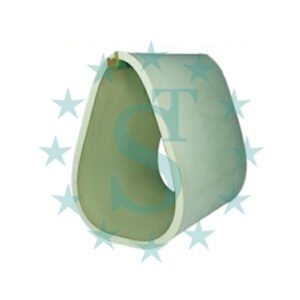
Rubber Blanket
In the textile finishing process for pre-shrinking fine, lightweight cloth, Twills, Drills, & other medium-weight fabrics. Rubber Blanket has the following features:
- Firstly, it is produced from the highest quality, dirt-free natural rubber and selective quality polymers to give extremely high compressive strength to the product.
- Secondly, it ensures a non-stick surface for an excellent fabric finish during the shrinkage process of the textile.
- Thirdly, the high-quality specialty rubber additive with high-performance anti-degradants is selected to prevent surface degradation of it at high-temperature processing, which gives excellent heat resistance and superior flex life to the product.
- Fourthly, a Superior quality Rubber can effortlessly be processed at high steam pressure on modern high-speed machines to give shrinkage-free fabrics. Because of the heat-resistant nature of the Rubber, it gives uninterrupted service before stopping the machine from grinding the new smooth surface.
- Fifthly, the good abrasive surface and excellent flex quality of it expected to give at least 10 to 15% higher meterage of fabric under ideal processing conditions than other brands of Rubber Blanket available in the Indian market.
Moreover, Producers of lightweight, low-shrinkage potential, 100% cotton or cotton/polyester commonly report from 15 million to 20 million meters of productive life.
🔶 Technical Specification
- Hardness: The recommended hardness of the rubber is between 36℃ – 39℃, depending on the fabrics to be processed.
- Fabric Width: offer current width of 1200mm to 3500mm.
- Usually, the rubber blanket should be 150 mm to 200 mm wider than the cloth to be processed.
- Pressure Circumference: The standard internal circumference of the Rubber Blanket is 3962mm (13 feet)
- Thickness: The most common thickness of a Rubber Blanket is 67 mm (2.5/8″) and varies up to 70mm. The higher thickness will initially require a higher force for outer surface elongation as the Blanket turns around the pressure. Results in cracks on the outer surface & will need to grind the surface frequently and often rubbing the Rubber Blanket from the inner surface. Usually, the Rubber Blanket thickness depends on the required shrinkage in fabrics.
- The Rubber Blanket has a maximum shrinkage capacity of Up to 15% for lightweight fabric processed on a comfit-type machine 50 mm.
- Usually, Rubber Belt thickness depends on the shrinkage needed in fabrics. For lightweight processed fabrics with low shrinkage fabrics such as poplins, fancy prints & synthetic dress material, etc., a Belt thickness of 55 mm is required. This rubber belt will have a shrinkage capacity of 5-8% for processing heavy weight fabrics like Denim, Twill, Drills etc. A belt thickness of 67-71 mm is needed. The Rubber Belt has a maximum shrinkage capacity of up to 15% for lightweight fabrics processed on a comfit type machine 50 mm A thick belt is most suitable with 3-5% shrinkage.
In conclusion, Rubber Blanket is best suitable for the garment industry or dyeing & printing plants which use machines like Compressive Shrinking Range or Zero Zero & Comfit
SKU: n/a